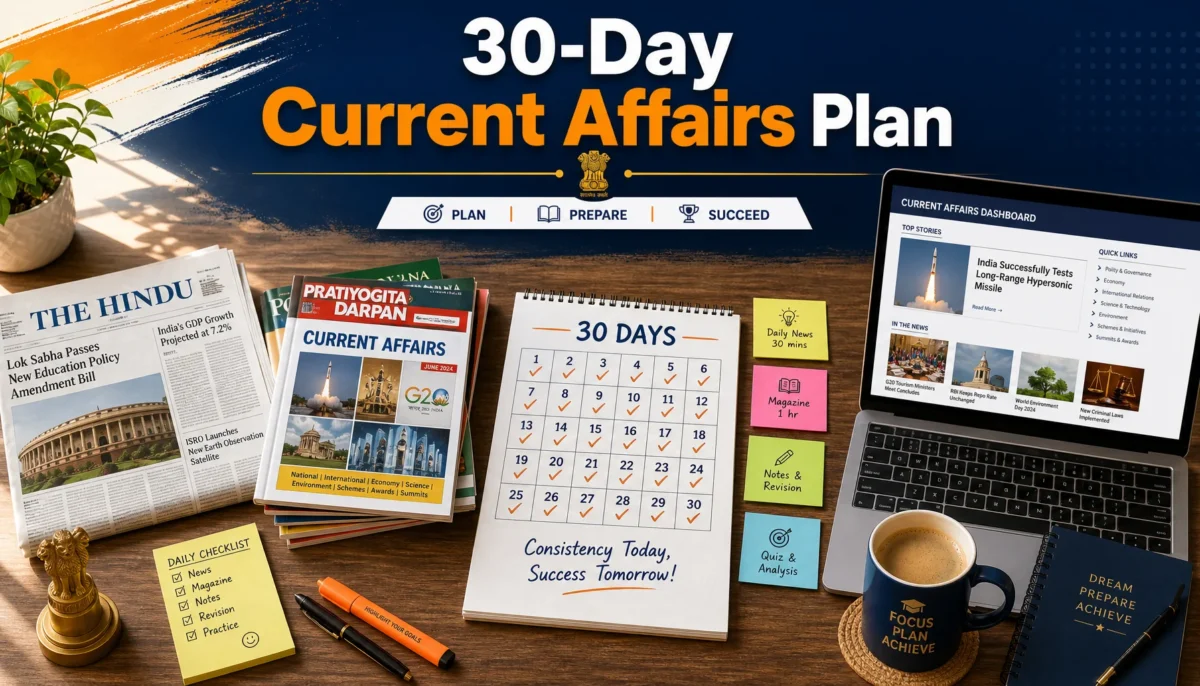
Current affairs can make or break your performance in competitive exams. Whether you’re preparing for civil services, banking, SSC, or state-level tests, staying updated with national and international events is non-negotiable. Yet many aspirants struggle—not because they lack information, but because they lack a system. Random reading, forgotten facts, and last-minute cramming rarely work. What you need is a structured, repeatable habit that turns overwhelming news into organized, revisable knowledge.
This 30-day study plan breaks the process into manageable phases. By the end, you’ll have built a sustainable current affairs routine, identified trustworthy sources, mastered note-taking, and revised strategically for test day. Let’s get started.
Why a Structured Approach Matters
Current affairs is a moving target. New events happen daily, and exam questions often test both recent developments and their background context. Without a plan, you’ll drown in headlines and retain very little. A structured approach helps you:
- Filter noise from exam-relevant information
- Build long-term retention through spaced revision
- Cover a broad range of topics systematically
- Reduce anxiety in the final days before the exam
Phase 1: Days 1–5 — Build the Foundation
The first five days are about setting up your system and forming a habit. Don’t rush to memorize everything—focus on establishing the right infrastructure.
Choose Reliable Sources
Quality beats quantity. Pick two or three dependable sources and stick with them instead of jumping between dozens of websites. Recommended options include:
- A national newspaper (for editorials and in-depth coverage)
- One monthly current affairs magazine (for consolidated summaries)
- A trusted online current affairs portal or app (for daily quizzes and updates)
- Official government sources like Press Information Bureau (PIB) for schemes and policies
Set Up Your Note System
Decide whether you’ll use a physical notebook or a digital tool. Create categories such as Polity, Economy, International Relations, Science & Technology, Environment, Sports, and Awards. This categorization makes revision faster and helps you spot patterns.
Phase 2: Days 6–20 — Daily Consumption and Note-Taking
This is the core of your plan. For 15 days, commit to a consistent daily routine that combines reading, note-taking, and light testing.
The Daily 60-Minute Routine
- 20 minutes: Read the newspaper or your primary source, focusing on national, international, economic, and policy news.
- 20 minutes: Write concise notes—not full paragraphs, but crisp bullet points with key facts, dates, names, and figures.
- 10 minutes: Take a short current affairs quiz to test recall.
- 10 minutes: Quickly revise the previous day’s notes.
Smart Note-Taking Tips
Effective notes are short and scannable. Follow these principles:
- Write only exam-relevant facts—avoid copying entire articles.
- Use a “who, what, when, where, why” format for events.
- Highlight names of people, places, schemes, and organizations.
- Add context: don’t just note a new policy, note the problem it solves.
- Keep a separate page for static-linked facts (e.g., a summit’s host country and its capital).
Connect Current Events to Static Knowledge
Exams love questions that blend current affairs with static general knowledge. When you read about an international summit, revise the member countries. When a new economic report is released, brush up on related terms. This integration deepens understanding and improves recall.
Phase 3: Days 21–25 — Consolidation
By now you have three weeks of notes. This phase is about tightening your knowledge and filling gaps rather than consuming more new content.
Review Monthly Compilations
Read through a monthly current affairs compilation to catch anything you may have missed. Compare it against your own notes and add missing points. This cross-checking ensures comprehensive coverage.
daily current affairs Quiz interview Questions
Create Quick-Revision Sheets
Condense your detailed notes into one-page summaries per category. Think of these as cheat sheets containing only the most important, high-frequency facts:
- Important government schemes and their objectives
- Key appointments and resignations
- Awards and honors with recipients
- Major reports, indices, and rankings
- Sports events, winners, and venues
- International summits and agreements
Phase 4: Days 26–30 — Revision and Testing
The final stretch is all about reinforcing memory and simulating exam conditions. Resist the urge to learn new material now—focus on locking in what you already know.
Practice with Mock Tests and Quizzes
Take a full-length current affairs quiz every day. Analyze your mistakes carefully: for each wrong answer, revisit the topic and reinforce the correct fact. Tracking your error patterns tells you exactly where to focus.
Use Active Recall and Spaced Repetition
Instead of passively rereading notes, quiz yourself. Cover your revision sheet and try to recall the facts from memory. Revisit challenging topics at increasing intervals—this spacing dramatically improves long-term retention.
Final Day Strategy
On day 30, do a light, confidence-building review. Skim your one-page summaries, avoid new sources, and get plenty of rest. Walking into the exam calm and organized is worth more than cramming a few extra facts.
Common Mistakes to Avoid
- Following too many sources: This leads to information overload and duplication.
- Passive reading without notes: You’ll forget most of what you read within days.
- Skipping revision: Reading once is never enough for retention.
- Ignoring the “why”: Memorizing facts without context makes application questions harder.
- Cramming at the end: Consistency beats last-minute panic every time.
Conclusion
Preparing current affairs isn’t about reading more—it’s about reading smarter. This 30-day plan works because it balances daily consumption with structured note-taking, consolidation, and disciplined revision. Build the habit early, trust your sources, keep your notes crisp, and test yourself relentlessly. Do this consistently, and you’ll walk into your exam with confidence, ready to tackle even the trickiest current affairs questions. Start today, stay consistent, and let the system do the heavy lifting.